
Key Benefits of the Delta Smart Screwdriving System for Indian Manufacturing Plants

Introduction: Why Indian Manufacturing Needs Smarter Solutions
India’s manufacturing sector is entering a new era. From automotive and electronics to heavy engineering, companies are under immense pressure to reduce defects, cut costs, and deliver faster—all while preparing for Industry 4.0 adoption.
Yet, one area often overlooked is fastening. Traditional screwdriving methods—whether manual or semi-automatic—can cause inconsistencies, product failures, and high rework rates. For plants competing in global supply chains, this creates significant risk.
The Delta Smart Screwdriving System directly addresses these challenges. Built with intelligent torque control, real-time monitoring, and seamless Industry 4.0 integration, it transforms a repetitive fastening task into a reliable, data-driven process.
Here are the five key benefits that make it an essential investment for Indian manufacturing plants.
What is a Fieldbus?
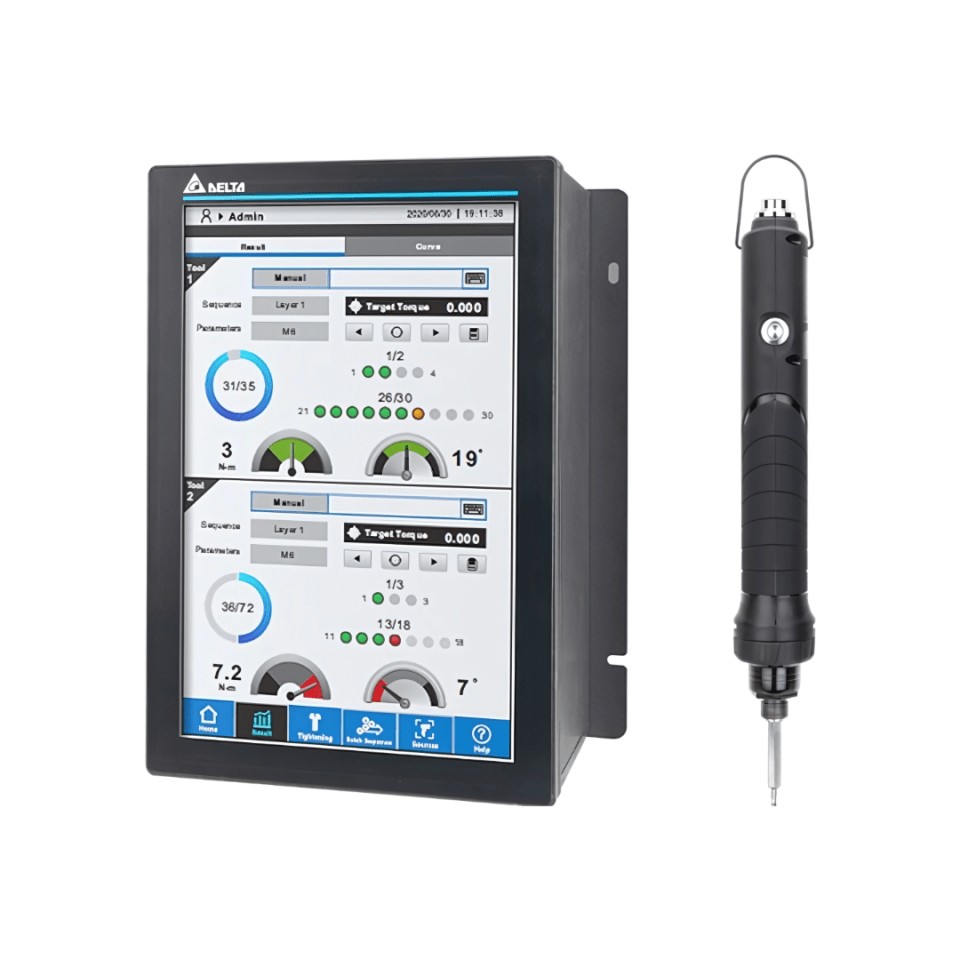
1. Enhanced Precision and Consistency
In high-volume manufacturing, consistency is everything. Even a single loose or overtightened screw can result in defective assemblies, costly warranty claims, or product recalls.
The Delta Smart Screwdriving System eliminates these risks by offering:
- Advanced torque control for precise fastening
- Error-proofing with automatic detection of missed or cross-threaded screws
Programmable settings for different product lines
💡 Example: In an automotive electronics assembly plant, the system ensures every ECU (Engine Control Unit) is screwed to exact torque, reducing failure rates during field operations.
2. Improved Productivity and Cycle Times
Manual fastening leads to fatigue, inconsistent performance, and longer cycle times. In contrast, the Delta Smart Screwdriving System automates repetitive screwdriving operations, helping plants:
- Achieve faster production speeds
- Reduce operator fatigue
- Minimize downtime through intelligent monitoring
💡 Example: A home appliance manufacturer in Pune integrated Delta screwdriving into its washing machine assembly line and reported a 20% reduction in assembly time, with the same workforce.
3. Real-Time Monitoring and Traceability
Today’s Indian plants are moving towards data-driven operations. Customers, especially in automotive and electronics, demand full traceability of every component.
The Delta Smart Screwdriving System enables this by:
- Capturing torque and angle data for each screw
- Logging results for audits and quality control
- Providing instant alerts if a fastening error occurs
💡 Example: A Tier-1 auto supplier used this system to comply with an OEM’s demand for complete fastening traceability. Every fastening operation now generates a digital report, cutting quality audit time by 40%.
4. Reduced Operational Costs
While automation investments can seem high upfront, the long-term ROI is undeniable. The Delta Smart Screwdriving System reduces costs by:
- Minimizing rework and scrap
- Cutting warranty claim costs
- Reducing manual labor dependency
- Optimizing energy usage
💡 Example: A consumer electronics plant in Bengaluru calculated that screw-related defects had cost them ₹30 lakhs annually in rework and warranty. After implementing Delta’s system, defect-related costs dropped by 60% in the first year.
5. Seamless Integration with Industry 4.0 Ecosystems
Future-ready manufacturing means connectivity and scalability. The Delta Smart Screwdriving System is designed to integrate with:
- MES (Manufacturing Execution Systems)
- SCADA & PLCs
- IIoT platforms for predictive analytics
This ensures manufacturers can scale automation without major rework, keeping them aligned with India’s push toward smart factories.
💡 Example: An electronics exporter in Noida connected the system with its MES and started predictive maintenance on fastening tools, reducing unplanned downtime by 15%.
Why It Matters for Indian Plants
Indian manufacturers are competing not just with domestic rivals but with global supply chains. Quality standards are rising, and tolerance for defects is shrinking.
The Delta Smart Screwdriving System provides a strategic advantage:
- Better customer confidence through error-free production
- Higher operational efficiency for plant heads
- Stronger global competitiveness in automotive, electronics, and heavy industries
Conclusion
The Delta Smart Screwdriving System is more than a fastening tool—it’s a smart manufacturing enabler. From precision to cost savings and Industry 4.0 readiness, it addresses the very challenges that Indian plants face today.
If your plant is looking to improve quality, reduce costs, and scale faster, this system is a proven investment.
👉 Learn more about the solution here:
🔗 Delta Smart Screwdriving System – Think Engineering
Frequently Asked Questions (FAQs)
Q1. Which industries in India can benefit most from the Delta Smart Screwdriving System?
Industries such as automotive, electronics, home appliances, and heavy equipment manufacturing benefit the most due to high-volume, precision-intensive fastening needs.
Q2. How difficult is it to integrate the system into existing production lines?
The system is designed for plug-and-play integration with MES, SCADA, and PLCs, minimizing downtime during deployment.
Q3. What kind of ROI can manufacturers expect?
Most plants report 10–20% reduction in assembly time and 50–60% fewer screw-related defects, translating to rapid ROI within 12–18 months.
Q4. Is the system suitable for SMEs in India?
Yes. While large OEMs adopt it at scale, SMEs benefit equally from defect reduction and faster throughput, making it a cost-effective investment.

Address- B/35, Sanjay Building No. 5, Akshay Mittal IND, Prem CHS Ltd., A.K. Road Marol, Near Marol Fire Bridge, Andheri East, Mumbai – 400059